


Solving environmental problems through systems.
To solve environmental problems, not only ideals but also、Innovation in technology and business models will be necessary. I believe that small ingenuity can lead to great results.
Pursuing sustainable circular systems
A business model can only be sustainable if it is economically rational. We believe that prioritizing continuity and scalability leads to effective choices.
Becoming the center of the system
We will not stop at theoretical solutions, but as a manufacturer, we will demonstrate a part of a circular economy. We will set an example ourselves and, together with global partners, realize a circular economy.
ABOUT US
The next standard
We are an "eco-conscious company" founded on the principle of "contributing to society from a global perspective with the aim of realizing a sustainable society."We focus on environmental technologies that are currently overlooked and aim to commercialize them.We will start small and work steadily towards our goals.
BUSINESS
Business content
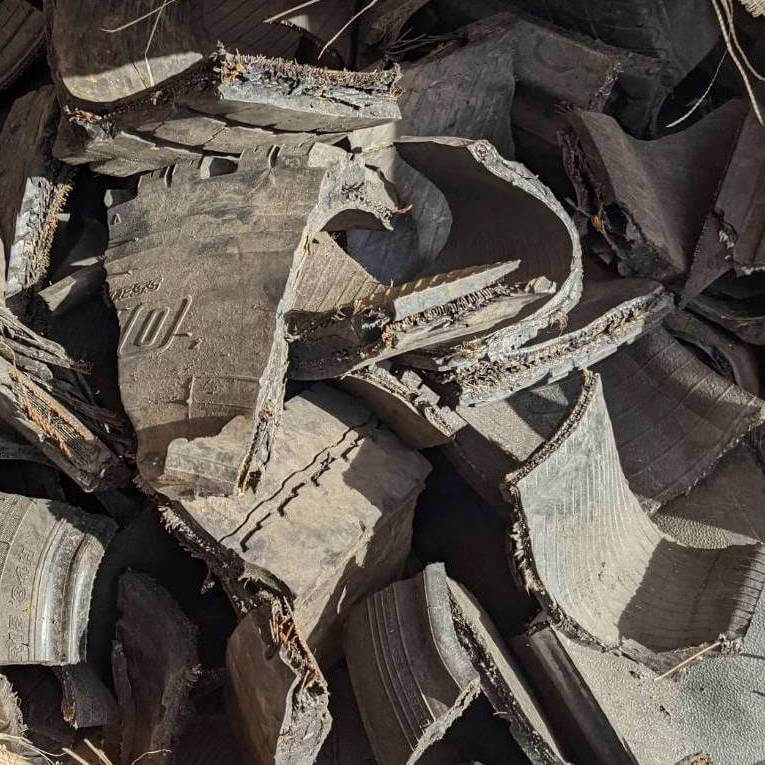
We are primarily engaged in the business of refining biomass fuel derived from waste tire chips.
By utilizing resources that would otherwise be discarded in large quantities and manufacturing recycled fuels ourselves, we play a part in creating a circular economy and addressing greenhouse gas emissions. By leveraging our unique technologies, we ensure economic viability while realizing a sustainable business.
We operate a business that refines biomass fuel from waste tire chips.
We will also engage in the refining of other waste materials and plant-derived biomass fuels.
By providing the know-how we have demonstrated in our renewable energy business to external business partners such as companies and local governments, we aim to realize a circular economy more quickly.
We will expand our tire fuel business globally in collaboration with our partners.
We are engaged in activities to promote the widespread use of natural refrigerants, the widespread availability of internet access everywhere, and the digital transformation of health management.
Through innovation, we will create value in the form of new technologies and services, revitalize existing businesses, and build a safe, secure, high-quality, and productive society that can maintain sustainable growth.
We will support venture companies that engage in innovative and creative management by providing risk capital and committing to their management and business expansion, thereby helping to enhance their corporate value.
We invest in and support innovative startup companies in the environmental field.
The necessity of recycling waste tires
Moving from thermal recycling, the mainstream method of waste tire disposal, to the material and chemical recycling that it should ideally be.
Recycling as a heat source
Approximately 100 million tires (about 1 million tons) are generated annually as waste tires (used tires), and it is estimated that 97% are recycled. This is comparable to the 94% recycling rate of aluminum cans, which are considered a model of recycling. However, the reality is that 65% of waste tire recycling is thermal recycling, meaning the tires are crushed and incinerated. In some countries, such as Europe, thermal recycling is not recognized as recycling.
Recycling as biofuel
While thermal recycling contributes to reducing landfill disposal and illegal dumping, it is not the ultimate form of recycling. Furthermore, competition with other waste-derived fuels, declining usage by the paper industry (which plays a central role), and environmental concerns are increasing the perceived surplus of waste tires. We believe that converting waste tires into biofuels, which are currently not widely used, is the most desirable solution to this increase.
The background behind our success in refining biomass fuel from waste tires
Regarding waste tire disposal, the "oil conversion" method, which includes waste plastics, was part of an initiative that became popular after the oil crisis. However, although many companies entered the market, they ultimately withdrew because it was not profitable, and the conclusion was reached that using waste tires as a heat source was the most economical option. We have overcome this economic hurdle and, for the first time, have derived a realistic solution using recycled tires as fuel.
Improvement of the oil conversion process
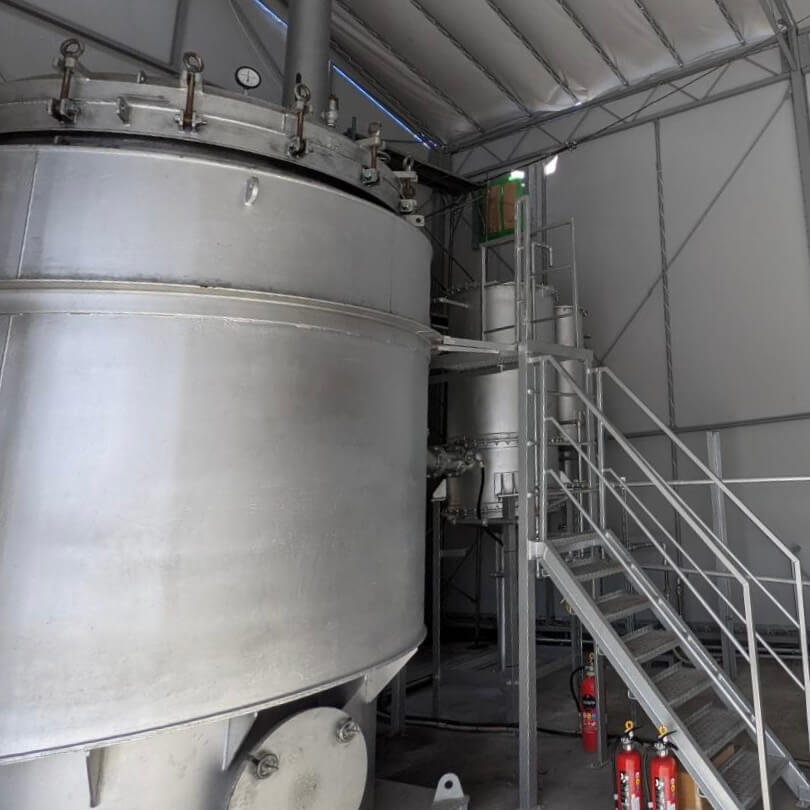
In the oil conversion process, crude oil is produced by vaporizing the oil through heat treatment and then cooling it. By efficiently performing this time-consuming heat treatment, we have achieved a significant improvement in productivity.
Improvement of the purification process
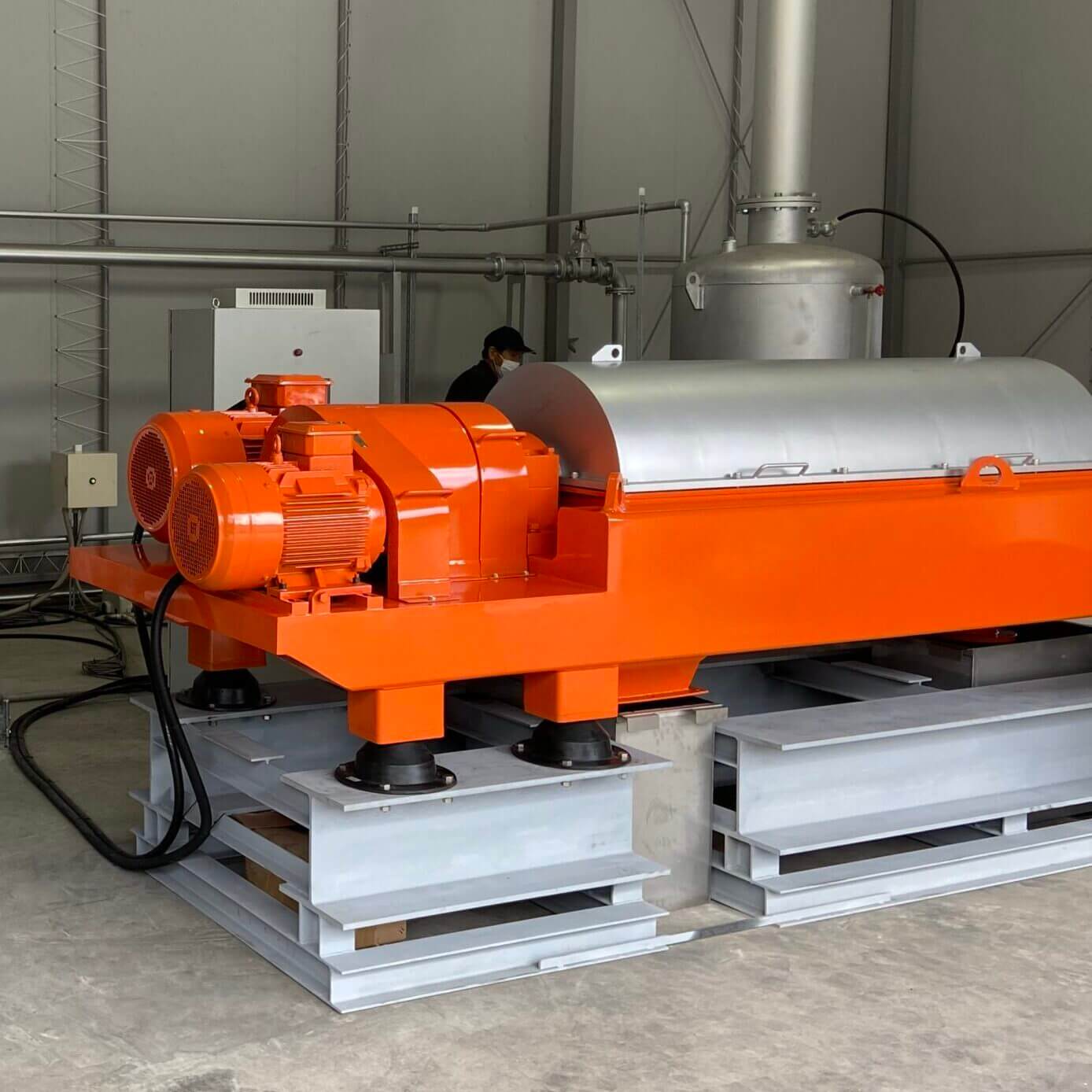
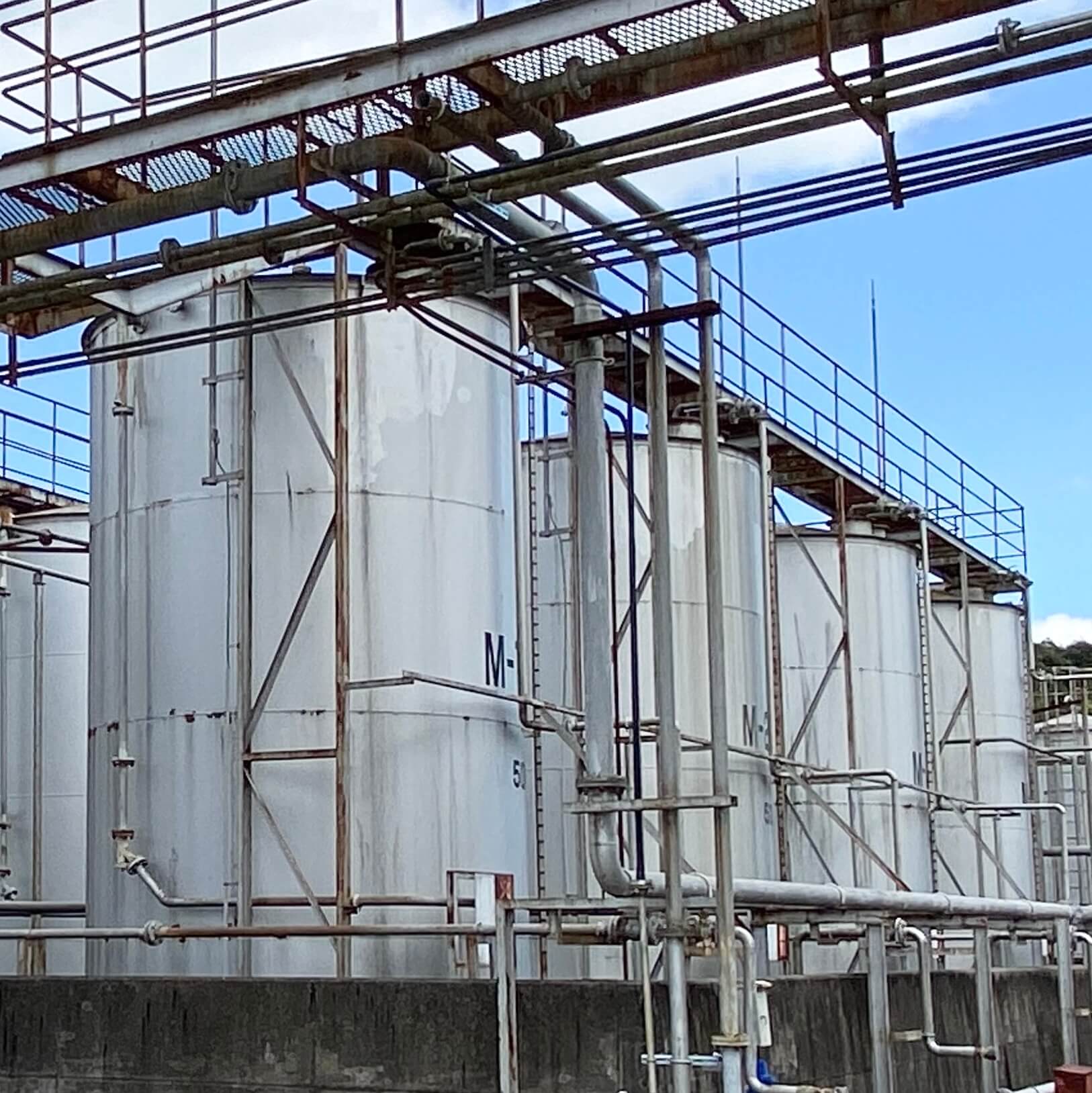
We have successfully developed a catalyst technology for efficiently refining biofuels. In addition, we have succeeded in rendering residual waste, which would otherwise be industrial waste, harmless, making it suitable for disposal as regular combustible waste.
Improvement of the purification equipment
Since existing equipment was insufficient for both the oil conversion and refining plants, we achieved the desired efficiency by incorporating unique designs and improvements that integrated with the process.
Business innovation
The utilization of waste tires, which contain a large heat source and are primarily composed of natural rubber, was necessary for a circular economy. However, there was a limit to the demand for simply shredded tire chips. We believed that the key to commercialization was to realize the production of biofuels, for which there is a large demand, within an economically rational framework.
Environmental changes
In addition to the problem of surplus waste tires, and with the growing demand for more environmentally conscious utilization of waste tires, there has been a significant increase in demand for economically viable biofuels from general businesses.
collaboration
Returnable is a business development company that focuses on environmental technologies that are currently overlooked and aims to commercialize them. We are not bound by the investment periods or returns of funds, but rather approach these projects as our own businesses. We are confident that the fusion of a technology-focused company and a business development company will lead to the creation of new businesses.
WORKS
We are realizing a circular economy.


Returnable Co., Ltd.
Recent Topics